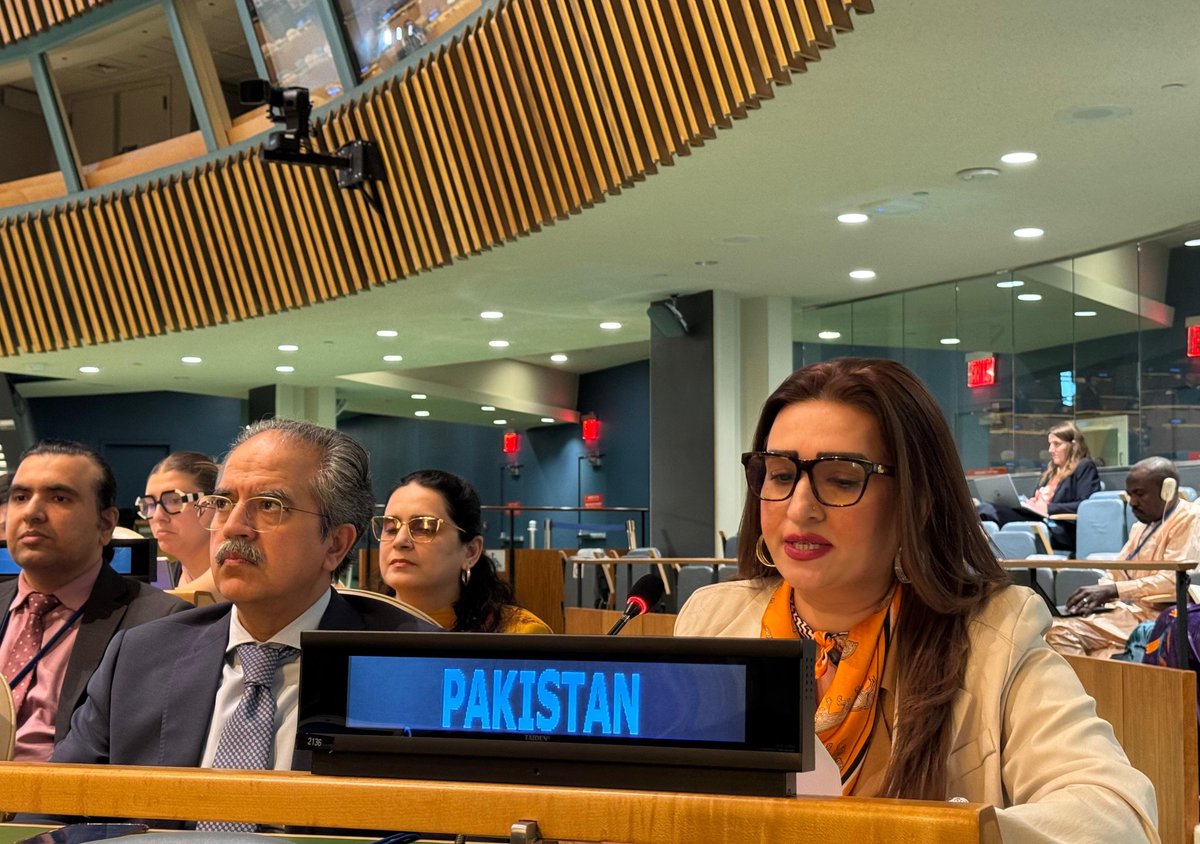
"Remarks by Senator Ms. Bushra Anjum Butt During the General Debate of 70th Session of Commission on the Status of Women (CSW-70) (12 March 2026) ****** Theme: “Ensuring and strengthening access to justice for all women and girls, including by promoting inclusive and equitable legal systems, eliminating discriminatory laws, policies and practices, and addressing structural barriers” Madam Chairperson, When women cannot access justice, the objective of gender equality and women’s empowerment weakens at its core. At the Fourth World Conference on Women in Beijing in 1995, Shaheed Mohtarma Benazir Bhutto — the first Muslim woman elected Prime Minister, reminded the world: “The discrimination against women can only begin to erode when women are empowered to claim their rights.” 2. This Session’s theme calls upon us to translate that moral clarity into institutional reality — to ensure that laws protect, systems respond, and justice reaches every woman and girl without discrimination or access barriers. 3. In Pakistan, access to justice is anchored in constitutional guarantees of equality before law, dignity, and due process. Institutional reforms have focused on strengthening both the reach and responsiveness of justice systems. More than 480 specialized Gender-Based Violence Courts are operational in the country, complemented by legal aid, family courts, ombudsperson mechanisms, laws to protect women’s rights and integrated protection services designed to deliver justice to women and girls. 4. Equally transformative is women’s rising representation within justice institutions. Women now constitute approximately 21% of the judiciary and 17% of prosecution services, with increasing presence in policing. Female judges serve at High Courts and Supreme Court — shaping gender-sensitive jurisprudence at the highest levels. 5. Yet structural barriers persist across the world for women and girls, from discriminatory norms to economic constraints. Addressing these requires integrated action: repealing discriminatory laws; investing in gender-sensitive judicial infrastructure; expanding digital and legal aid services; and embedding legal literacy to empower women to claim their rights. Madam Chairperson, 6. Access to justice is the bridge between rights promised and rights realized. If laws exist but cannot be accessed, justice is theoretical. If institutions exist but do not include women, justice is partial. If barriers remain unaddressed, equality remains aspirational. 7. Let us therefore move from symbolic commitment to structural transformation. For when women trust the law, democracy deepens; when institutions serve women equally, societies become inclusive; and when justice is accessible to every woman and girl, equality ceases to be an ideal — and becomes reality. I thank you."
Context and Analysis
Confirmed sources have released a significant statement addressing current developments. This announcement provides clarity on matters of national importance and reflects the government's commitment to transparency and public engagement.
This development comes as part of ongoing efforts to keep the public informed about important policy decisions and national security matters. The statement has been welcomed by political analysts and the general public alike.
Key Points
The announcement emphasizes several important aspects of national policy and strategic direction. Experts suggest this will have positive implications for regional stability and international relations.
Reactions and Response
Political commentators have noted the significance of this announcement, highlighting its potential impact on various sectors. The clarity and directness of the message have been particularly appreciated.
Looking Forward
Further details and implementation strategies are expected to be announced in the coming days. This represents an important step in the nation's continued progress and development.



.png)