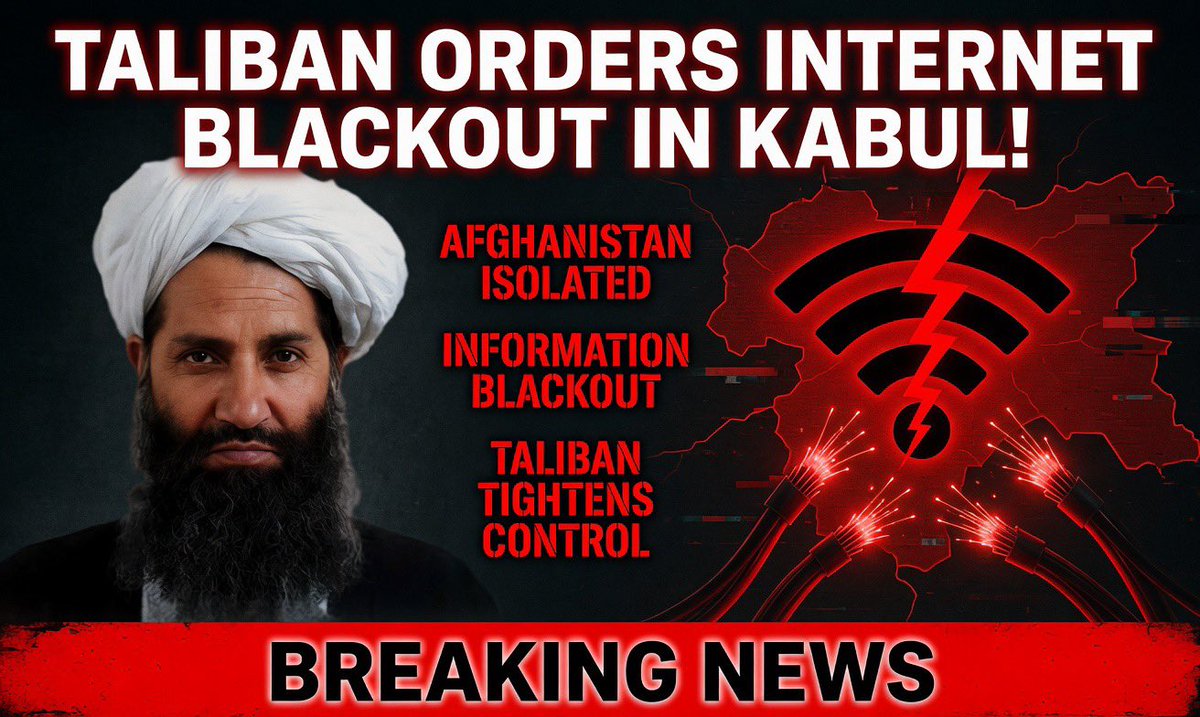
This analysis examines reports that Taliban leader Mullah Haibatullah Akhundzada directed the Telecommunications Regulatory Authority (ATRA) to cut off fiber optic Wi‑Fi across Kabul. The move signals a sharp escalation in information control as the Taliban consolidate power and restrict dissent. Technically, severing fiber optic connections in the capital would significantly reduce high‑speed internet access for households, businesses, hospitals, schools, and NGOs, potentially forcing users onto limited or satellite services. The immediate consequences could include hampered emergency communications, disrupted education for students reliant on online resources, and major challenges for humanitarian operations that depend on reliable connectivity. Economically, digital‑dependent small businesses, freelancers, and remittance channels could suffer. From a rights and governance perspective, such outages raise serious concerns about freedom of expression, access to information, and due process; international norms increasingly view blanket shutdowns as disproportionate limits on fundamental rights. In my view, while security concerns are real in a conflict setting, a broad internet blackout is a disproportionate measure that harms civilians far more than it protects them, risks deepening information isolation, and could impede essential humanitarian work. A more balanced approach—targeted restrictions with transparent criteria, judicial or independent oversight, and safeguards for medical, educational, and humanitarian services—would minimize harm while addressing security considerations. In practical terms, resilience could come from satellite connectivity for critical services, international support for alternative communication channels, and a robust civil‑society push to protect information access. Ultimately, this decision represents a serious setback for digital rights and sets a chilling precedent for information control in Afghanistan’s precarious environment.
Source: Statement from @pakafghanmatter
Public Engagement: 135 views • 6 likes • 1 shares
Published: May 11, 2026, 11:34 am
Editorial Note: This article is based on publicly available information and official statements. We strives for accuracy and fairness in all reporting.
.png)